I love history, and I often wonder what life would be like if I was born in a different time and place.
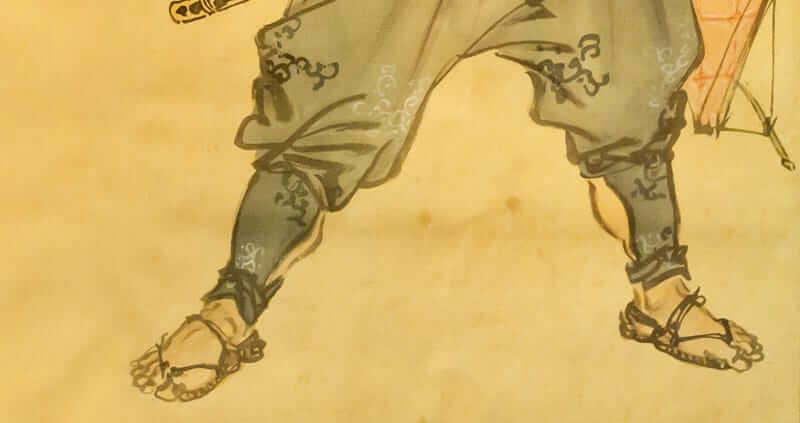
In pre-modern Japan, for a thousand years, Buddhist pilgrims would travel long distances wearing homemade straw sandals named waraji (草鞋).
A pilgrim would typically walk 40km per day in these for weeks or months, traversing all kinds of terrain and climate in solitude, going through 3-4 pairs each day.
Waraji was also the footwear of choice for samurai heading to battle, as well as for all kinds of hard physical labor.
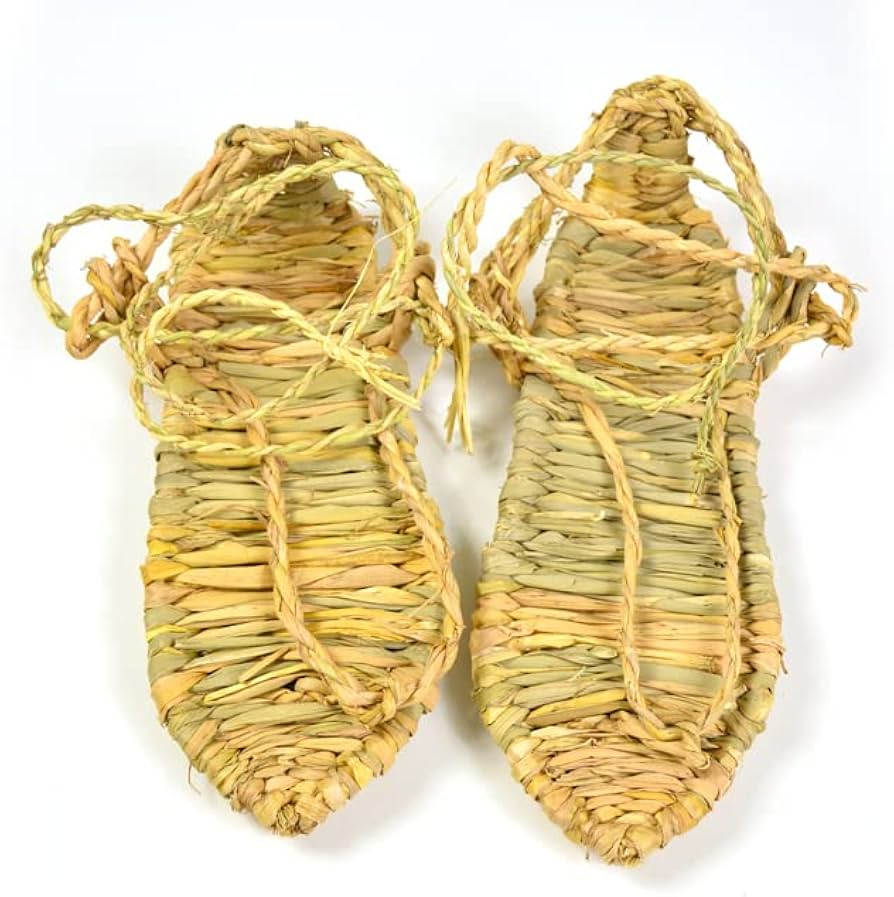
Naturally, I had to experience walking in these historic sandals myself.
I called on my friend, Oki-san, who is a professional artist (and amateur martial artist) in his late 60s, and we began looking for a good walking course that offered soft ground (waraji is not meant for hard concrete surfaces) and wasn’t too short or too long.
We settled on the Ten-en hiking trail in Kamakura, that covers multiple small shrines / temples, is only around 5.5km in length, and isn’t very tall either (the summit is only around 150m above sea level).
Next step, buying waraji!
You can buy waraji on Amazon Japan, but they take a while to ship, and it’s hard to attest for the quality because there are very very few reviews. I eventually decided to buy them in person in a store, so I headed to Asakusa, which is pretty much the only place where you can still buy high-quality waraji.
I showed up at the Nakaya Honten, a store very close to the Sensō-ji temple that is known for all kinds of traditional Japanese festival clothing as well as footwear. Tucked away in a small area right in front of the cashier, under a huge selection of tabi shoes, were three baskets of waraji in three sizes: Small, Medium, and Large. I asked to try one on the spot:
You’re typically supposed to wear tabi shoes inside the waraji (called waraji-kake), but I chose not to buy them. Instead, I had a pair of tabi socks that I had picked up at a ryokan previously, so I chose to go “commando” and just wear socks.
(I would eventually come to regret this decision. If you want to do a waraji hike, buy waraji-kake, not just tabi socks.)
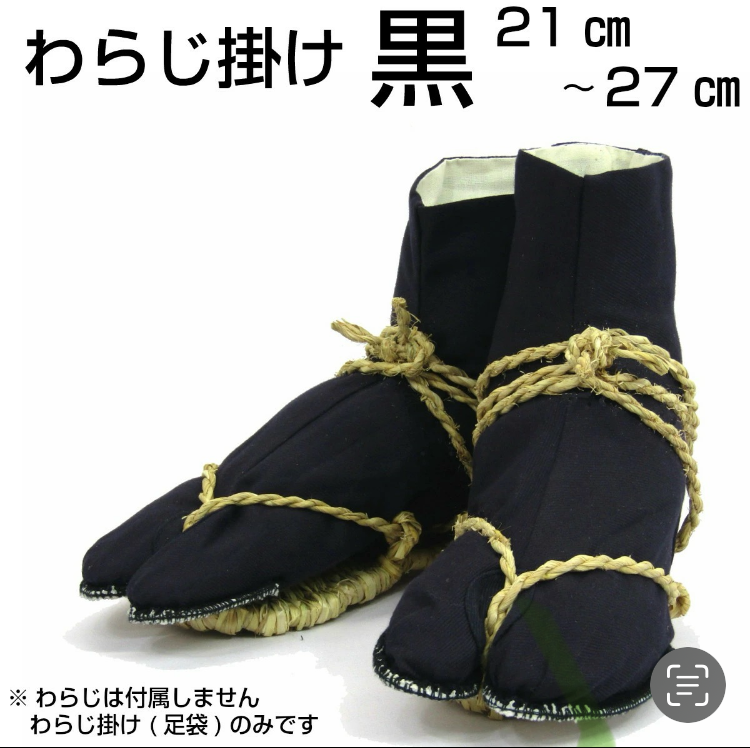
The store clerk was very surprised when I told her what I’m planning to do, and cautioned me that waraji isn’t very tough and might break soon after I started walking. But I thought to myself, if that happens, so be it. If people could walk 40km with only 3-4 pairs, 5-6km shouldn’t be so bad.
One week later, I found myself in Kita-Kamakura at the foot of the Ten-en trail. I was ready to put on my waraji by my own hands (I got to the starting point in regular shoes, and switched to waraji right before the hike):
Now, one thing to understand is that waraji is smaller than your feet, so your toes kinda hang outside the footwear and grip the ground when you walk.
So I was worried about my toes getting injured by stepping on a thorn or something, and was beginning to wish I had bought waraji-kake instead for protection.
This turned out to be a non-issue.
In reality, as soon as I started climbing, I realized:
These suckers are better than my expensive hiking shoes!!!
The people who relied on these for a thousand years definitely knew something we don’t.
The grip you get in waraji, especially while climbing rocks etc, feels much more natural than in shoes.
There’s also something to be said about the tactile feedback of the ground to your feet, which is hard to explain, but I felt much more comfortable and at ease:
We made our way up to the top of the Ten-en course, where we had an onigiri lunch with Japanese pickles that Oki-san and his lovely life had prepared for us, and a “vegetarian steak” I got at Gyomu super that was basically seasoned soy meat / gluten, and was surprisingly delicious.
A couple of other hikers noticed my waraji and commented on them.
Here’s what my feet looked like at the summit:
Now, remember I mentioned that I regretted not getting waraji-kake?
The time I ran into problems was while descending.
Typically, even while wearing regular shoes, descending can be hard on your toes and nails. But with waraji, especially if you’re simply wearing socks, the stalk in the front that goes between your toes tends to really dig into your skin and can hurt a lot, as the whole waraji is being pulled back on every step.
It wasn’t unbearable pain, but I did feel concerned about whether I’d get a shallow scar or something between my toes. (I later checked, and thankfully I didn’t.)
At the end of the hike, the waraji on both my feet had survived and were in excellent condition — no damage whatsoever!
Most of my fears about hiking in waraji had not materialized, even though I was doing it sub-optimally with socks.
All in all, I’m blown away by how good waraji are. Very comfortable, very sturdy, and offer an excellent grip.
I will 100% repeat this adventure, next time probably going for a longer hike (perhaps along a river bank) and investing in good waraji-kake. If you’d like to join, feel free to email me at waraji@mngrwl.com.
