Codex Audentia

Codex: An ancient manuscript text in book form.
Audentia: Latin for “audacity”.

This is my codex — a working notebook with my notes, experiments, and rambles in their full glory. It is raw, unpolished and unfiltered.

This is not a blog.

I’m building a 1,000 year company, and writing about the process.

The future of long-term hiring: the Nintendo way?

By Rambles No Comments
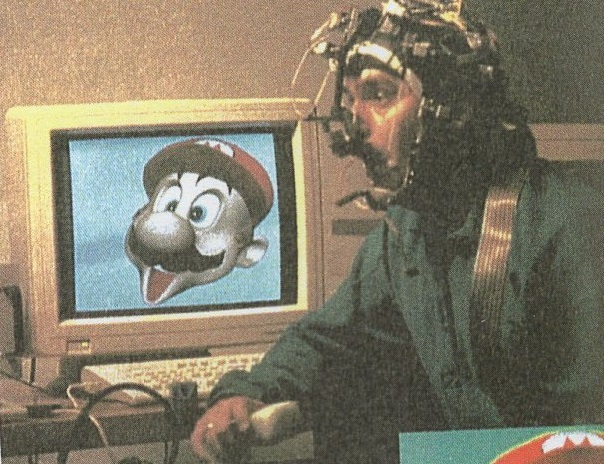
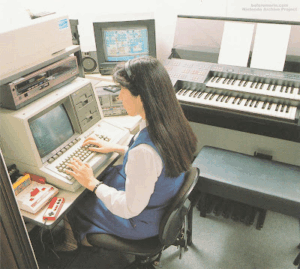
A sound designer at Nintendo in the late 80s.

It’s no secret to anyone who knows me that I intend for SANPRAM to be like Sony or Nintendo: product and R&D-oriented companies that keep innovating over decades.

Fun fact: Nintendo has released not one, but multiple gaming consoles that each became the best-selling consoles in the world. Famicom / NES, then the Game Boy series (which had an 11 year reign, dethroned eventually by the PlayStation), and then a comeback with the Nintendo DS, the Wii, and recently the Switch. The company has a legacy of outdoing itself again and again.

I want to build a real, lasting company, where generations of people can build their whole careers and eventually be proud to retire from. That seems to go counter to the prevalent approach in the early 21st century startup industry, where every founder is building a “one-time business” that they can “exit” with 7 figures in the bank in as short a time as possible.

I’ve observed that more and more companies are being built around a culture of plugging holes — i.e. the idea that every person on the team is a meatbag you found to do a particular task / fulfil a role that came up.

They’re built on freelance developers from Upwork, and/or remote employees strewn across the world whose loyalty to the company is as feeble as the company’s to them.

The problem with this mindset is that the company stays static.

But for a company that can adapt and evolve with time, its people need to adapt and evolve too. This means you can don’t have exclusively job-based hiring, but rather membership-based hiring — you look for individuals who show the right attributes and are capable of constantly learning and adapting and reinventing themselves, and then have them grow into different roles and tasks throughout their career.

At first thought, it reminds me of the traditional Japanese way, where you would join a company as a fresh new graduate “salaryman” and then be assigned to different departments based on your aptitude during the training phase. It’s also similar to how a lot of IT services firms in India operate.

But the challenge of the membership-based approach is that in a tech-heavy company, most new hires would be too unskilled to produce any results early on! You can’t expect to train someone to be an engineer from scratch while they’re doing nothing on payroll. In a job-based environment, this is not a problem because you already know that the person can deliver results.

So what’s the right approach? As it usually happens, whenever you face a human problem, someone has already found the solution — and in this case, guess what, it is Nintendo. :)

The Nintendo Tweak

Nintendo follows a hybrid approach. They are a hardcore tech company that demands exceptionally high levels of skill (in fact, their business depends on their ability to keep developing proprietary technology), but they’re also Japanese — and their new employee retention rate is a staggering 98.8%. Out of every 100 or so people who join the company, barely one or two decide to leave.

How do they do it? The answer is simple: specialized career tracks.

  • Engineering/technology
  • Design
  • Sound
  • Production planning
  • Sales/administrative

Everyone applying to the company has to pick ONE track that they would like to join, and that’s it.

The cool thing is that you now have enough of a structure that you can find people with a proven level of skills to begin with (i.e. they will be productive from day 1), but also enough flexibility that you can pick people based on way more holistic criteria beyond “can you do this particular job or not?”

This is not a new thing. The company’s biggest “star,” Shigeru Miyamoto (the creator of Donkey Kong, Mario, and Zelda — each of which were massive goldmines) was hired in the same way. As a young kid, he came to Hiroshi Yamauchi with just a portfolio of drawings and endless creative energy — and was put in the architecture / planning division solely based on that. One day, Yamauchi needed a new game for the US market, but found that every game developer was busy with other projects. So he called Miyamoto to his office, took a brief interview, and gave him the job of developing the game. The result was Donkey Kong, which is single-handedly responsible for Nintendo of America’s existence as a company today.


The SANPRAM Way

This ties beautifully to how I too want to do things at SANPRAM:

No titles.

Every person in the company is identified simply by their name and the track they are in:

  1. Makers (engineering / tech / R&D all in one)
  2. Designers (aesthetics and media)
  3. Admin and sales

For now, that’s more or less it.

When hiring “makers,” I’m not just looking for “software engineers,” though it’s very helpful to have that. I’m much more interested in people with a strong attitude and aptitude towards problem-solving, craftsmanship, and invention / innovation. The exact skills we’ll have in the company will always be a melting pot as time goes by. Good makers prepared to pick up new tools and knowledge over the decades.

For a maker, the kid who has been dabbling with programming since 5, but also building remote-controlled submarines and fiddling with game development, is a better fit than the “React developer” who went to a front-end bootcamp and got into the profession because it pays well.

After all, if we just want a React expert, there’s always Upwork for that.


This article is from my codex.


初めまして。 I’m Aman, a founder based in Tokyo, Japan. We’re building a 1,000 year company.

You can subscribe to these posts here.

How to be good at sales as a non-sleazy, nice person

By Rambles No Comments

As an entrepreneur and former “professional” salesperson (it’s weird to say that because as an entrepreneur I’m a pro salesperson by default, but you know what I mean), I’ve forgotten more sales content (books, articles, etc) than most people will ever read in their lifetime. And I’m not proud to say that.

For the longest time, I lived in the sinister hole of believing that I was bad at sales, and that I needed to learn the tips and tricks of the trade to get “better.”

What made it worse is that depending on who you listen to, there are vastly different opinions on what makes a great salesperson. A lot of sales coaching out there honestly makes me want to puke (not because I know more than they do, but because it just feels manipulative and shitty human behaviour).

Like everything, there’s an 80-20 rule. The basics are the most important, and coincidentally if you just practice the basics at a very high level, you will usually outperform everyone else.

So here are the basics of sales that I’ve identified, which I’m happy to practice for the rest of my life.

The basics of sales — what I’d teach my younger self

If you’ve ever highly recommended a product or service to a friend or family member (whether it was a book, a video game, a movie, a doctor or plumber, a restaurant, etc)… then you already have the foundation to be a world-class salesperson.

I kid you not.

The emotional state you’re in when you genuinely recommend something to someone, knowing that it will be beneficial to them, is the single biggest aspect to success in sales that I’ve found.

You recognize that feeling — the confidence, the faith and certainty that it will help the other person, the detachment from the result (you don’t even have to remind yourself that if they reject the recommendation, it’s nothing personal), the adaptation on the spot (if you realize during the conversation that the recommendation isn’t right for them, you either adjust or move on) — all these things happen naturally in that emotional state.

Selling, but without selling – the holy grail.

How do you get into that emotional state about a new product or service?

Let’s invert — how to make sure that you don’t get into that state?

  • You don’t know anything about the product in the first place, where it shines compared to the competition, or who it’s really good for.
  • You don’t know the person you’re even talking to.

So if you don’t know the product, and don’t know the person, you have no chance in hell.

The correction is simple — learn about the product and the prospect until you can tap into that emotional state on command, the way you could do for your favourite gaming mouse or something.

The non-sleazy, honest sales game is inherently a cooperation between yourself and the customer. When you do sales this way, you feel no guilt or awkwardness, because you’re no longer creating an adversarial relationship with the other person.

Try it.


This article is from my codex.

“Customer-Worthy Commits”: A new daily unit of work for solo founders

By Reflections No Comments

In my previous post, I talked about how Stephen King has a daily goal of writing 10 pages (roughly 2,000 words). After that, he stops writing and does other things instead. He honors his limit so that he can stay productive over a long consistent period of time and never get into a slump.

Since being a solo software founder is also a creative profession, I’ve been wondering how to apply that work ethic to programming. What should be a good “daily target” for a solo technical founder?

The answer I’ve come to so far:

1-2 “customer-worthy commits” (CWCs) per day.

A customer-worthy commit is exactly what it sounds like — the kind of code commit that you could proudly tell a customer about.

Meaning that it’s bigger than a small cosmetic change. It has to meaningfully move the needle in terms of how well you are serving your customers.

In fact, I believe that ALL meaningful work in the company (especially as a solo operation) can and should be reframed in a way that it directly benefits the customer. This includes refractoring / maintenance work. If it can’t be justified to your most important trading partners, it shouldn’t be done at all.

Of course, these 1-2 CWCs are just for the creative side of work every day. Other managerial and admin work is secondary. “Make” before you “manage.”


This article is from my codex.

You can subscribe to these posts here.

Applying Stephen King’s Rules to Software Development: Crafting Digital Experiences

By Rambles No Comments
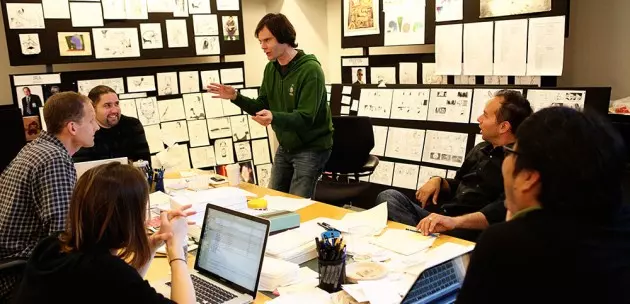
The writing room at Pixar for “Inside Out”

When Stephen King (the writer behind the stories of films many of us love, such as The Shawshank Redemption, The Green Mile, It, etc) finishes a draft of a novel, he is said to put it in a drawer and let it “rest” for a minimum of 6 weeks before he comes back to edit it.

“With six weeks’ worth of recuperation time, you’ll also be able to see any glaring holes in the plot of character development. I’m talking about holes big enough to drive a truck through.”

This gave me flashbacks of a moment I had recently while building our current product (a tool that greatly speeds up reading technical content, while also increasing comprehension). After months developing the tool, when I finally used it to read a paper (Deepmind’s AlphaFold paper in Nature), I too noticed some glaring issues that I hadn’t foreseen. There was a hole in the plot.

This brings me to an important point about my approach to software development: what we’re crafting isn’t tools for someone to use, but rather digital experiences that they participate in.

A digital experience has a story to it (not a “user story,” but rather the overall storyboard of what’s going on), and every interaction has to serve the story.

When seen in this way, our products are no different from novels or movies or video games. They are works of art, and they should be edited and produced in the same way.

Maybe I won’t take six weeks off, but here are some aspects of writing for an audience that I can borrow:

  1. Have one IDEAL READER experience it before you allow others. In case of Stephen King, it’s his wife. (Find someone, even pay someone from your target audience to use the product as you watch.)
  2. Kill your darlings. (If a feature isn’t serving the story, or if you need to add a feature that hurts your pride, do what needs to be done)
  3. Discipline. Stephen King writes 2000 words / 10 pages each day, including holidays and vacations. And he stops once he hits the limit, to leave gas in the tank and keep momentum.

    What would be a good daily target for software development?

    Moreover, what is a good unit for software work in general? (For Stephen King, it is the paragraph).
    • X lines of pseudocode? (Because pseudocode is in your control, and then you can spend the rest of time coding and squashing bugs?)
    • X commits: how many?
    • X hours: Currently trying 3 hours, but it’s… a weird one. Doesn’t seem to reflect real productivity.
    • A new deployment: make at least one change to the live product each day?

Okay — I’ve found a really good answer.


This was the first official post in The Writing Founder project, which I announced publicly… 30 minutes ago.

This article is from my codex.


初めまして。 I’m Aman, a founder based in Tokyo, Japan. We’re building a 1,000 year company.

You can subscribe to these posts here.

The Writing Founder Project

By Rambles No Comments
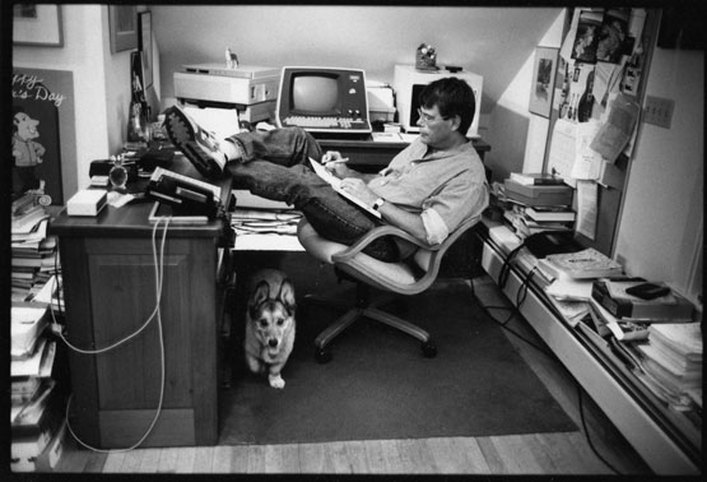
Stephen King’s writing desk

As a goal-oriented person, for many years, I’ve lived in “goal hell”:

My life had become an endless to-do list that served to achieve the list of goals — business goals, health / fitness goals, intellectual goals, etc (you know how it goes) — that I had set for myself.

Add to that a big dose of insecurity about how far behind I was, and how little time I had left.

Anything “fun” I did felt like adultery, cheating on the to-do list that was my life. In fact, I wasn’t doing anything fun at all.

Worse, adultery is addictive. So the more goal-oriented I was, the more unproductive I became, falling into destructive behaviours like late-night anime-bingeing. (Thankfully I don’t do any physical substances like alcohol or drugs).

I had trouble getting out of bed in the morning to pursue the very goals that were supposed to excite me, and at the end of each day, after failing to complete the to-do list that no sane person could finish in the first place, I reinforced the sense of inadequacy and the numbness of wondering what my life even was anymore.

The reason it happened is very clear to me now:

Most of the work required to achieve any of our goals is tedious and boring. It’s our job to make it fun, because nobody else will do it for us.

I finally had a revelation recently when I saw a popular online creator say that the goal of all his projects is actually to create books. Physical books. All the work he does, funnels into that ultimate format. It is the end product, and everything else he creates or publishes on the side is an ancillory activity.

…the core purpose of this program (and all the work I do — the pop-ups, the videos, everything) is to produce books.

Craig Mod

Interestingly, books aren’t even the thing that makes him the most money — that mostly comes from his content’s paid memberships (something like Patreon that he runs himself).

I was really struck by this, and it’s the right message at the right time.

As a writer myself, I’ve long felt a sense of guilt whenever I spent time doing it — “I could be working and making money instead!”

But writing and sharing what I’ve learned is what brings me the most joy. That’s what most of my writing is about — doing something I found interesting, and then sharing what I learned with others.

What drives me is stories.

I see myself mainly as an explorer or a scientist on this planet, and even entrepreneurship is simply a lifelong experiment in “what ifs” and “wouldn’t that be cool.”

And that brings us to what I call The Writing Founder Project:

WHAT IF the final output of all my activities was to write about the experience?

From now on, my core purpose of building SANPRAM will be to create media.

Here are the formats this content will be in:

1) Written word

I’ve played with all the major written formats: books, long essays, and short posts.

Books (physical books) are the hardest, but also the ultimate form, because ) they are timeless and 2) paper is a wonderful creative medium that allows you to do things that digital never can.

And I just realized that they don’t have to be long. You can write a very short book.

The one drawback is that they cost money to read and take up space for the reader, so it better be something they’ll want to collect. A printed book should either be worth reading again, or be used as a constant reference, or be seen as a travel companion. I’m happy that my first book, Tech Fluent CEO, met these criteria.

Essays and short posts would be the bulk of my writing. I’ve found that consistent high-quality essays are great for building a following.

Here’s the different kinds of posts I’ll be writing as an output:

  1. Sunday Reports — not monthly, because a 7 days is a more tractable unit of time (it’s hard to mentally grasp how long a month really is and be conscious of it). Deadline: every Sunday.
  2. Daily Work Logs — whatever I happens that day. Deadline: every day.
  3. Rambles and reflections — these will be about whatever is on my plate at the moment. The core of my codex.
    • Format: take a company goal, and as you go through the process, document the process in front of the whole world. Simple.
  4. Periodic Tech essays — this is how I got my start in writing. I take a technical topic, and write a deep explainer essay.

The whole workflow should go like this, each step starting and ending with a piece of writing:

  • Ramble: I set a goal for what I need to do at the moment, and a timeline for it.
  • Ramble: I write my plan for how I intend to do it.
  • Rambles and Reflections: I start working the plan, and write about each step.
  • Weekly report: I share the results / progress being made.

2) Video

Video is a great form of documentation, and it has certain advantages over text (being able to SHOW things, and share live emotions)

I’ve decided that video will best be a companion to my writing, as opposed to its own medium. I will use video to enhance the meaning of my written essays, as a communication aid.

It would fit mostly in the rambles and weekly reports category.

For livestreaming, I’ll use StreamYard.

3) Audio

I already host two podcasts, using them mainly as a networking tool for building more relationships with other founders. I intend to keep doing them, but further reduce the effort that goes into production. (Not that I was putting a lot of effort to begin with)


Q. What to share, and what to keep private?

I just had a long conversation with Gemini about this one, because I neither want to be so secretive that nobody gets value, nor to overshare so much that I come across as a clown / it’s boring / I give away strategic secrets.

To figure out where I fall on the spectrum, I looked into the sharing habits of Warren Buffett / Charlie Munger, and for an outlier opinion, Elon Musk.

Here’s the edited consensus, which I also feel comfortable with:

What to share:

⁃   Visions of the future I want to build
⁃   Monumental challenges that apply to the whole industry (“manufacturing is hard”, “full self-driving is hard”, etc) — highlight the difficulty of the process.
⁃   Product announcements (often very early)
⁃   Positive Outcomes: deliveries, good customer feedback, things that are really cool
⁃   Negative Outcomes (after they've been overcome): what happened, how we overcame it, and how our creative process / intellectual method has been changed or reinforced because of it.
⁃   The intellectual process / beliefs and philosophy behind decisions, and insights gained.

What to delay or keep private:

⁃   Core IP / secret sauce / technical details of solutions we develop.
⁃   Fundamental / existential doubts about the viability of whatever I’m doing. (Hey, I'm human, they come up from time to time)
⁃   Real-time suspense of a process that is in motion.
⁃   Anything that affects other people / makes someone lose face / reveals others' secrets.

This article is from my codex.


初めまして。 I’m Aman, a founder based in Tokyo, Japan. We’re building a 1,000 year company.

You can subscribe to these posts here.

The Development Process at SANPRAM Research

By DenseLayers, Reflections No Comments

1. Build features, fix bugs.

2. Test Early, Test Often.

3. Make it pretty.


Build

The product / feature roadmap will always be long and full of ideas.

We need to go in concentric circles.

First, get the right balance of shock and cheese. That is, the product should do its job really really well.

Only then, focus on balancing function with elegance. It shouldn’t just do its job, but also be a delight to use.

Test and Refine

Our own standards for whatever we ship should be higher than anyone else’s.

Whether it’s an external customer or an internal customer.

It has to be un-live-withoutable AND inarguably the best.

Delight

After the product works beautifully and checks all the boxes, make it beautiful, delightful, and memorable.

魅力的品質。


This article is from my codex.

You can subscribe to my newsletters here.

A new north star metric for engineering: Elegance?

By Reflections No Comments
Source 1

Hey, help me out here.

Is it my imagination or some cognitive bias, that whenever I’m trying to solve a problem, the best solution also always turns out to be the most elegant?

I can’t think of a situation where a messy / “involved” solution to a problem wasn’t hands down inferior to a more elegant, in fact beautiful-looking solution I found later.

And it seems like that for most other problem solving in life, even in human relationships.

Of course, there can be elegant solutions that don’t work at all – but then, they’re not solutions?

So here’s an idea: elegance as an engineering metric.

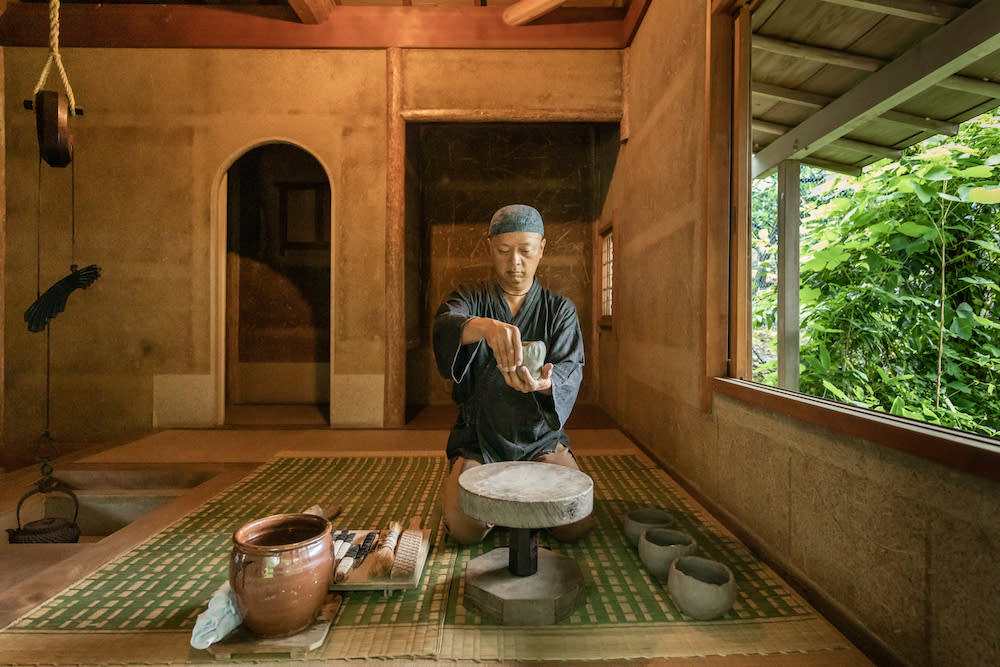
  1. Source: Ishikawa crafts https://www.ishikawatravel.jp/en/stories/traditional-crafts/ ↩︎

This article is from my codex.

You can subscribe to my newsletters here.

There’s no lucky punch

By Reflections No Comments

Haijme no Ippo is one of my favourite anime (and TV shows) of all time, and it’s a boxing anime.

One of the main characters, Ichiro Miyata, is the son of a world-class boxer whose career ended suddenly one day, during a fight that he was supposedly dominating.

Ichiro says that his father’s opponent, who was physically stronger but technically much inferior, just landed a lucky punch out of nowhere.

But the Miyata Sr. countered back:

In boxing, there is no such thing as a lucky punch.

Any real punch has some force behind it, which means that the person who threw it was still in the fight.

That person had not given up on winning yet.

A weak ass punch from a fighter who has already “quit” could never knock out a world class boxer.

I think this is one of the most life-changing dialogues I’ve ever seen in any work of fiction.

How much of success in life depends on simply staying in the fight? Whether it’s business, or sport, or relationships / marriage, or anything like that?

How many people have made breakthroughs by simply sticking it out and doing the work beyond the point that most people consider a “lost cause” — and then being told someday that they got lucky?

Decades are made up of days and weeks.

By Reflections No Comments

This week and this day is the template for the entire decade.

Think about what you’d want this decade to mean in the context of your entire life story, and then look at how you’re spending your time and energy.

  • The time you waste today,
  • The energy and health you’ll lose on toxic people and destructive habits this week,
  • The opportunities you procrastinate on AGAIN to do the things you should (even telling your loved ones that you love them)

…will repeat themselves like a pattern and dirty the end result of this entire decade unless you FORCE significant effort into overcoming this inertia and change what you do today.

As I’ve gotten older, I’ve realised that despite the many things outside our control, we still mostly write the story of our own lives. We’re unconsciously shaping our story every day, just by the way we choose to spend our time.

Days and weeks become decades. Decades are made up of days and weeks.


This article is from my codex.

You can subscribe to my newsletters here.

Giving up on “Good”: An Ode to the Basics

By Reflections No Comments
Hokusai; Tiger in the Snow (painted in 1849, the last year of his life)

I was talking to a former teammate today and he told me that he’s “trying to get good at storytelling” because it doesn’t come naturally to him.

I told him it was a huge mistake to think that way. “Never try to get good at something you’re not talented in.

Trying to “get good” at something, in my opinion, is in fact downright dangerous.

When you try to “get good” at something, you’re inadvertently buying into several destructive beliefs:

  1. That you are “bad” at the thing compared to others
  2. That you have to “reach” some kind of advanced level of proficiency (which you vaguely describe as “good” or “no longer bad”)
  3. That you will “suck” at it for an indefinite period of time

This is way too much pressure to actually make any kind of meaningful progress.

Counter-intuitively, by following the above advice, you can become world-class at that very thing, sometimes outclassing even those who are talented at it.

And that brings us to today’s topic: the Basics.

I’ve learned that it’s way better to reframe your perspective to this instead:

I’m not talented at this. I shall give up on being good at it. Hence, I will only learn the bare basics — and then simply practice those basics endlessly until the end of my life.

In any domain you can think of — whether it’s mechanical engineering, music, public speaking, marriage, sex, basketball, or customer service — there is always a list of “basics” or “fundamentals.”

The key quality of basics is that anyone can learn them, practice them, and become great at them. And therein lies the deceptive power.

I’m a firm believer that simply by mastering the basics, you can do better than most of the so-called “experts” and “advanced practitioners” in any domain you can think of.

In fact, you could become the best in the world.

Like Kobe Bryant

Or like Hokusai (the great Japanese artist) whose quote went like this:

…until the age of 70, nothing I drew was worthy of notice. At 73 years I was somewhat able to fathom the growth of plants and trees, and the structure of birds, animals, insects and fish. Thus when I reach 80 years, I hope to have made increasing progress, and at 90 to see further into the underlying principles of things, so that at 100 years I will have achieved a divine state in my art, and at 110, every dot and every stroke will be as though alive. Those of you who live long enough, bear witness that these words of mine are not false.

So I’ve personally given up on ever getting “good” at anything.

Here are some things that I’m not good at, where I’ve managed to come FAR by simply learning the basics:

  1. Judo (struggled to get “good” for 3 years; suddenly had a breakthrough when I refocused on the fundamentals)
  2. Interpersonal relationships (the first few chapters of ‘How to Win Friends and Influence People’ by Dale Carnegie are alone enough for a lifetime of success)
  3. Programming / Software engineering
  4. Japanese
  5. Business strategy

Either I’m already good at something (which means? you guessed it, time to do more practice), or I’m gonna master the basics. Now back to the dojo.


This article is from my codex.

You can subscribe to my newsletters here.

I challenged myself to get a black belt in Judo in 12 months, training at the Kodokan in Tokyo.

Getting Out of Beginners’ Rut in Judo

By Martial Arts No Comments

Judo is one of the toughest and most unforgiving sports — because the fundamentals take an extremely long time to learn. And during that time you’re also getting thrown around and humiliating yourself in every randori, which doesn’t help.

But I’ve realized that most of these frustrations are because of a lack of structure and goals in judo training. It’s tough because you don’t even know what you’re looking for. It just feels like an ocean of things to learn ahead of you, but feeling doomed to stay in the shallow waters for years, unable to move forward. After a while you begin to resent the very ocean you were so excited to cross.

So here’s what I’m doing to get *consistently better* in Judo, in a way that I can actually feel the progress, see where I’m going, and get excited to show up everyday.

Making a chart of the basics

Two basic things have to come together for a nice, clean throw to happen in Judo. Let’s list them:

  1. Getting the opponent off balanced (kuzushi)
  2. Being in a position where you can complete the throw

But to make these happen, a lot of other things need to work together:

  • Having the right posture and stance, so you can move into position
  • Pulling or pushing your opponent in a way that you can make them off-balanced
  • Having the right grips on the opponent to control their posture and center of gravity
  • Finding or creating the right timing and space to enter into position
  • Etc

All these aspects must be learned and improved in training, and practiced in randori. Each of these yields a demonstrable, measurable improvement in your randori!

The basics are hard, but they can be learned if you know them. Judo is like a jigsaw puzzle that has to be put together.

Presenting the basics in a more structured way would benefit the struggling beginner. But if the dojo/instructor doesn’t do it, just make your own plan!

My focus right now

As I approach my 3rd kyu grade, the pieces are starting to make sense in my brain. I’ve started to identify my own areas of improvement — there are so many, as I described above — and am working on them one by one.

My most recent breakthroughs:

  1. Relax and breathe through your nose. You can’t learn anything from a randori session if you aren’t using your head to read and fully feel the situation instead of single-mindedly attacking or doing survival defense. I sometimes just “chill” in randori and allow the person to throw me around, just to squeeze the fear out. Getting better at ukemi makes you better at judo.
  2. Get the right grip for the right throw, and learn to choose the right throw based on the opponent’s body type and gi’s thickness. I can’t easily do a seoi nage is their lapel is too thick and too tight to fold, AND the guy is shorter than me. I have to grab them differently. You can’t make this decision in real time unless you follow #1.
  3. Hanging onto your opponent transfers your weight on them. Makes your feet much lighter.
    If you’re light and physically weak, learn to project your entire body weight through your hands. They should feel like a 30-40kg dumbbell just got dropped on them or (taken off their hands) in unpredictable rapid succession every time I move.
  4. Every judo technique needs a certain “space” that, should you create and enter it, hands you a beautiful throw. If you enter a throw without creating the space first, you’ll get repelled back or countered. I’m starting to get a great sense of what this space is like for the seoi-nage the more I practice it (the opponent needs to be on their toes or bent over a certain amount, the hikite needs to be high enough, and I need to be at a certain distance), and it really helps a lot.
    Instead of saying, “I didn’t have kuzushi” when I fail at a throw, saying “I didn’t create the right space” is much more actionable and useful feedback — kuzushi is so broad and hard to grasp at my level that I need a proxy for it.
  5. When you attack, attack with the intent and EXPECTATION to throw the opponent for ippon. Don’t do half-hearted attacks — they drain energy and don’t teach you anything.
  6. Mae-mawari ukemi. I want to do it as beautifully and painlessly as some of the senseis.

Judo feels more thrilling and exciting than ever, as if there isn’t enough time in the world to practice!

Judo: the wand chooses the wizard

By Martial Arts No Comments

In Judo, we have the concept of the tokui-waza, or your “signature throw.” It’s like in the comics (every character has this one power move?).

Every Judoka has a tokui-waza or two. Even at the highest level of competition, they usually stick to one or two throws. All they work on in training is different ways to get a dominant position to set up their signature throw, and ways to defend against different throws. They simply polish it until it matures into a terrifying move that they become world-famous for.

Most people, when choosing their tokui-waza for the first time, just pick the throw that they like, or that suits their body (eg: “if you have long legs, you should do uchi-mata”).

For the longest time, I had decided that my signature throw had to be the uchi-mata. It’s called the “king of all Judo throws”, and I have long legs. So it felt like a match made in heaven.

Olympic gold medalist Arai Chizuru demonstrates her repertoire of uchi-mata attacks.

Except that it was not to be. I consistently struggled to make it work, no matter how much I practiced it. It always felt just out of reach.

On the contrary, I always felt like my weakest throw was the ippon seoi nage. It always felt too difficult even in practice — I couldn’t get the armpit in my elbow and even the throwing motion felt awkward, more like the opponent slipping to the side than a proper “throw.”

Until recently.

I just so happened to try the ippon seoi nage on the opposite side (my tsurite) as opposed to my hikite. And boy it worked — fitting like a glove. I even tried it in randori and threw one person with it, without even really training for it (and what’s interesting is that I had never successfully done a real forward throw in randori up until that point with all the throws that I did train for).

3-time Olympic gold winner Nomura happens to have the same ippon-seoi-nage as mine — on the tsurite as opposed to the hikite!

The same thing is happening with my backwards throw — I was always a believer that it’s osoto-gari for me, but recently it appears that the kosoto or ouchi or ouchi are strong rising contenders.

The more you learn Judo, the more “aha” moments you have that upend the whole paradigm of what you think you knew about a certain throw. I was watching a video of a former world champion in Judo last week, and what was interesting to me was how she was still learning about basic things — the “aha moments” — the same way as we do as white belts in class. She looked like she could have been another one of us, as if she too was merely at the beginning of her journey. No matter how far you go, there are still treasures waiting to be unlocked — which explains why there are people in their 80s and 90s who still do Judo religiously in Japan.

Natsumi Tsunoda is a world champion in Judo, and is still having “aha” moments everyday.

So which throws will end up being my tokui-waza? It’s still early to say, but now I know for sure that they will present themselves to me eventually, the longer I train judo. They might even change a few times over the course of my journey.

The signature throw will choose me when the time is right — not the other way around.

My plan to get a Black Belt in Judo in <12 months

By Martial Arts No Comments
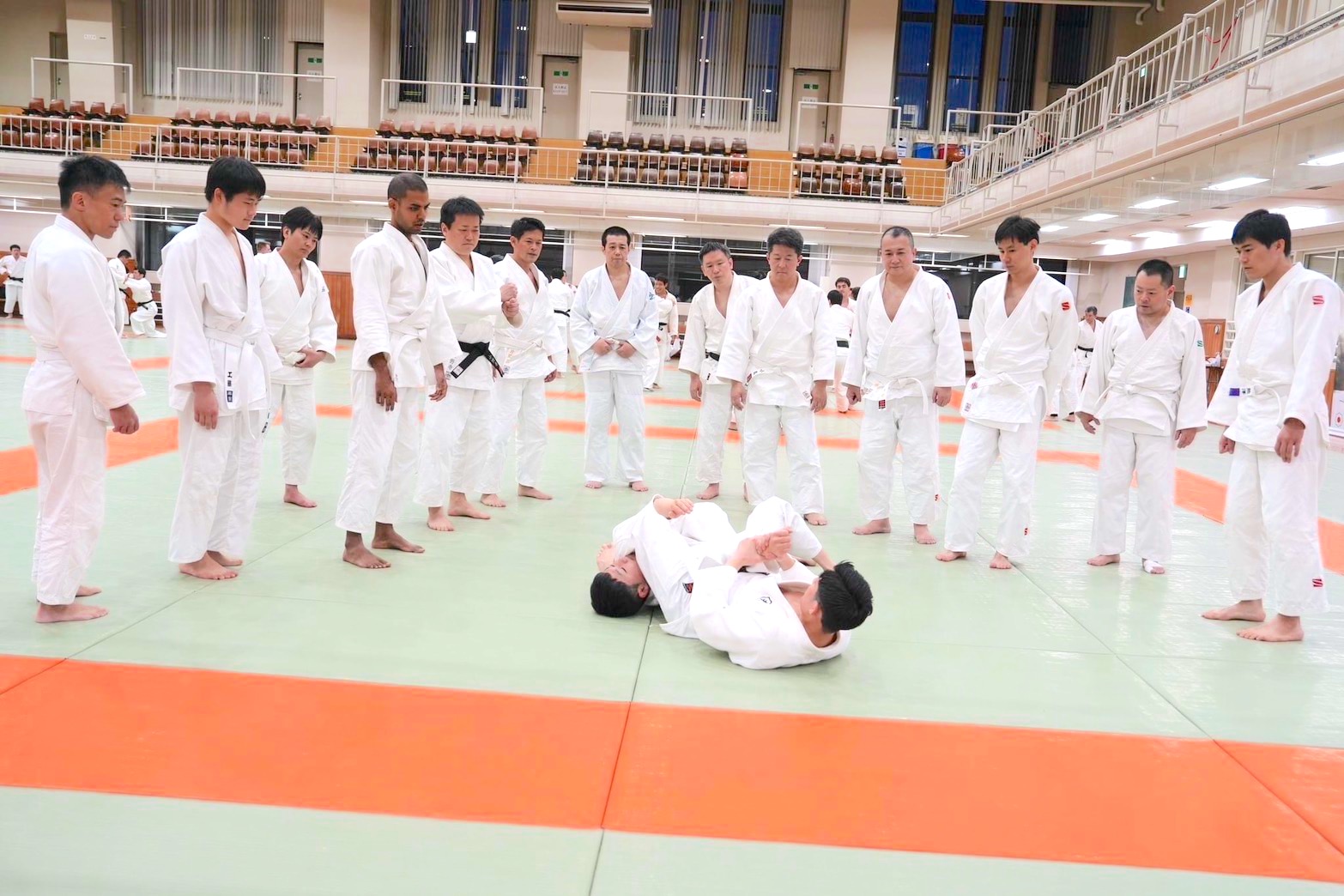
You might recognize the only non-Japanese person in this picture :)

Oh no! I forgot to share some big personal news with my total online following of 5-10 great people.

In December 2023, I set myself a goal to achieve a shodan (1st degree black belt) in Judo — in 11 months (November of next year). I’m writing this blog post on April 28, so I’ve been on this journey for about 5 months.

I first learned Judo for 1.5 years in the USA (first at Cornell University’s Judo club, and then at the San Francisco Judo Institute). I was dedicated, but I never felt like I had actually *learned* any Judo. In short, I felt like I sucked as much as any other beginner. My technique was terrible, and I had no idea why.

Here’s how:

The dojo

I’m training at the Kodokan, which is both the birthplace of Judo and the center of the global Judo universe.

Here’s what it’s like, based on a Reddit thread I shared earlier:

The course is 12 months long, and divided into 2 parts. First part is 3 months long, and the second is 9 months (when the “kyu” ranks begin). The idea is that you get your shodan at the end, but it seems most people get injured etc somewhere in between and get their shodan delayed by a few months. I’m yet to meet or hear about anyone who got their shodan in 12 months as per the plan.

When you first show up to the Kodokan, they ask you to first watch a class in full (it’s almost mandatory) and then do an “interview” with the head coach about your prior Judo experience. You can skip the Judo school altogether and only sign up for the “randori class” that happens at the same time, but is almost exclusively full of black belts.

Class is at 6pm, 90 minutes, 6 days a week. Sundays off. Being late to class is acceptable, but the sensei might ask you to explain yourself if you’re late every single day. You usually have to make 13-14 classes for the month, or you have to repeat that month. To advance ranks, you have to have a certain number of attendances.

Instruction is 100% in Japanese, but a few Senseis speak a little English, and your classmates can usually help translate/correct you if you don’t understand. I speak okay Japanese so I don’t face too many problems, but there are a few people in class who don’t, and they’re faring okay too.

Class starts with a warm-up + ukemi for the first 20-30 minutes or so, but once in a while you have a sensei who stretches it to even 45 minutes, doing different drills and playing “games” to train your agility or balance or reaction speed etc.

First few classes focuse on learning etiquette and how to bow the right way (yes, you read that right), and then learning proper ukemi. The bowing instruction can feel a little bit of a waste of time in the beginning, but I’ve found an appreciation for these little things as time goes by. After a few classes, you start with the basic throws (o-goshi, de ashi barai, seoi nage, ippon seoi nage, and hiza guruma), and basic ne-waza pins (mostly kesa-gatame).

In the second month, you start learning new throws (tai-otoshi, harai-goshi, osoto, ouchi, kosoto, sasae, etc). Usually the class is divided into 3 groups: first month students, then second + third month students, and then all the kyu grades. The 2nd and 3rd month curriculum is the same, and we always train together. You basically spend 2 months practicing the same throws.

The quality of instruction varies because each day there’s a different sensei, and even though most of the sensei’s are 6th degree red-white belt and above, once in a while you do get a sensei who’s barely interested in teaching at all. In fact, there are also a couple 5th degree black belt sensei whom I actually like the most, because they put more effort into teaching. The technique also varies from sensei to sensei, because everyone has their own way of teaching the same throw — but I think that’s also okay, because you have to adjust the throw anyway over time and find YOUR way of doing it. It also varies with the body type of your opponent (i.e. the way you do a seoi nage on a person of similar build is very different from an uke who’s heavier and shorter). In the beginning, it can be a little confusing as to “which way are you supposed to learn.”

But overall, the system of instruction is very good. It’s not perfect (I’d still change a few things, from a beginner’s standpoint), but it’s still very good. There’s no randori for the first 3 months, and I love that. I first learned Judo in the USA for 1.5 years, where beginners are thrown into randori (pun unintended) too early in my opinion. Once I got here, I also realized that I had never really learned to do ukemi properly — they tend to fix most of these little mistakes.

I also want to mention something in general — I’ve found the Kodokan to be a very fun, warm, and “easy going” environment to learn Judo. It’s not overly strict or military-like, and everyone is more on the jolly side. They’re very inflexible with administrative stuff (i.e you can’t do things out of the “process” in terms of enrolment etc, which is typical Japan), but in terms of the class itself, they let you go at your own pace and focus on your own judo journey.

Consistency

I started out going 3-4 days a week, because my body simply couldn’t take the beating (after over 3 years of being out of it).

Soon, I heard that the only way to get a shodan in 12 months is this: 1) come everyday, and 2) don’t get injured.

I took this to heart, and since then, I’ve been showing up 6 days a week, every week. The only exceptions are when I’m really sick, or have a non-negotiable professional commitment.

The senseis have also taken notice, and my Judo has improved drastically. In the first 2.5 months of randori in Japan, and in the first 1.5 YEARS of Judo in the USA, I rarely ever threw anyone — but recently, I’ve been consistently getting more throws. The ratio is slowly getting better.

But as with everything, unlike learning Japanese, learning Judo is not a linear curve — there are good days and bad days, good weeks and bad weeks, and even good months and bad months. I’ve sprained/practically broken my big toe on both feet more times than I remember, and my right shoulder has become like a grumpy old man who wails and complains about a new problem every 2 weeks.

But the key is to keep showing up, and ride the plateaus. The worst thing to do is to quit when things have just started getting better!

Even if I’m injured, I still show up to just watch and do whatever technique work I can. It’s better than nothing, and in fact, it’s an opportunity to work on the weak parts of your Judo — footwork drills, gripping, posture and balance, and what not. Showing up everyday to improve something, yields drastic results over a long period of time. That’s what MY Judo journey is all about.

It’s highly possible that I may fail to achieve my goal of shodan due to an unexpected circumstance. But I believe that as long as you’re obsessed with a goal, it will happen — human obsession is a force that can bend the universe itself.


I challenged myself to achieve fluency in Japanese in 12 months. The result blew me away.

Language learning — a bowl of vapor

By Language Learning No Comments

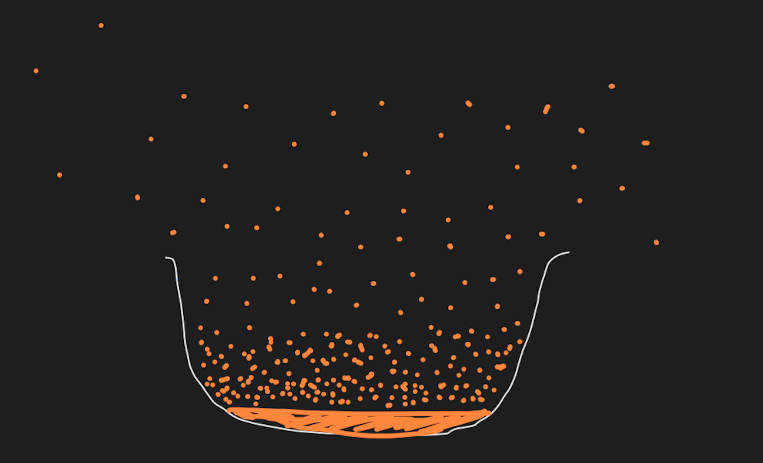
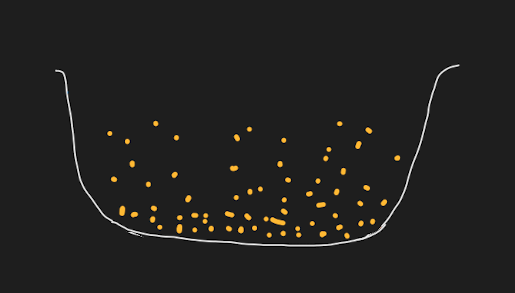
Every orange speck in this image is akin to a “word” or a small “piece” of the language. And it is just as light as air.

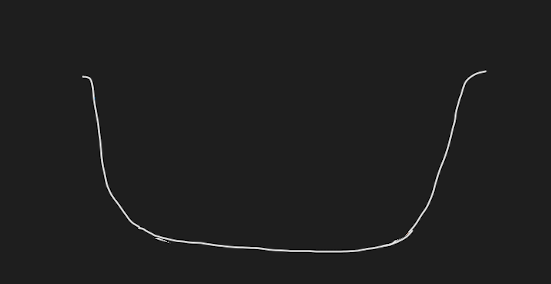
At first, you start with an empty bowl.

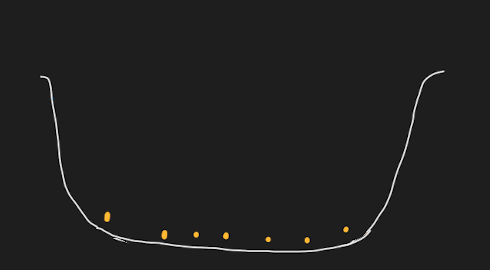
As you start learning, you start to grap some specks and place them at the bottom carefully. They are immediately usable, and part of your active vocabulary! You can say “hello” and “goodnight” or whatever.

As you begin to grab more specks — now by the handful — and throwing them at the bottom of the bowl, most of them bounce right back and keep floating above the bottom.

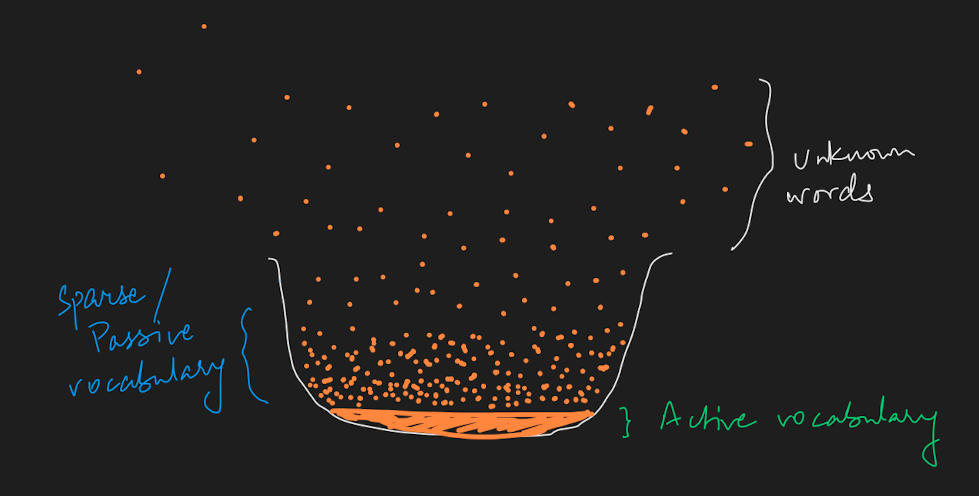
These “floating” specks are not a part of your active vocabulary yet.

Each time you “encounter” a word in your learning journey, you effectively “pat” its corresponding speck towards the bottom of the bowl. Eventually, it will stick.

You have to pat them multiple times, because they bounce back (i.e. you forget them too soon).

Since the goal is to increase the amount of the language that’s settled / stuck at the bottom of your bowl, you can do one of two things:

  1. Keep grabbing more and more specks and throwing them at the bottom, knowing that some of them will not stick — but by sheer brute force, each day, the sediment at the bottom does grow a little.
    This is the HIGH INPUT approach — read, read, and read new material. You don’t make an effort to remember anything, but as the common words keep reappearing, they settle down over time. It’s more enjoyable, but also has a long slog before you make “sudden” progress.
  2. Or, you can take the STUDIOUS approach — review, review, review every new word you learn until it firmly sticks at the bottom, before you go out learning new things. This is akin to picking up each speck individually and pressing it into the bottom of the bowl to make sure it sticks.

    This improves retention, but severely limits your speed of acquiring the language. You can never become fluent in this way.

In the end, your knowledge of the language will always look like this:

A solid amount is settled at the bottom in your active memory, but a significant part is “fuzzy” / sparse, and another big chunk of words is still in the air and you haven’t even encountered them yet!

Language is easy. Culture is difficult.

By Language Learning No Comments

The process of learning a language is really the process of acquiring a new culture.

It’s not “how to say X.” It’s “how to convey this feeling/meaning?” The difference is nuanced, but it makes a huuuge difference.

For instance, you don’t say “I want to eat cake” in Japanese.

You instead usually say, ケ-キが食べたい — which roughly means, “cake induces the desire to eat (in me)” or “the cake is eat-wanting” (however you want to phrase it).

The cake is the SUBJECT of the sentence, not the object!

In Japanese, as opposed to English, it’s acceptable to attribute a kind of “life” or “intention” to inanimate objects, which we don’t usually do in English.

Another case in point: in a language exchange recently, I remarked in English, “I learned some new concepts!” And then I asked, how do I convey that in Japanese?

The answer: the Japanese simply say (if translated), “I became wiser.”

We both joked about how saying something like that in English would be overly dramatic, and that maybe the Japanese people are always low-key sarcastic, etc.

Or take the “passive voice” in Japanese. There are different words for “receiving” something as a favor or handout (which places you below the giver), versus a tribute (placing you above the giver).

These are not simply linguistic lessons — they’re cultural lessons.

A lot of language learners get frustrated with languages over time, seemingly confounded at all the “exceptions” and “complexities.”

People who see a language simply as a large set of grammar rules and vocabulary to learn, are missing one of the most critical aspects that make the difference between being “familiar” with a language versus being “fluent.”

They chalk it up to “a language gene” or talent, while the actual cause of the lack of progress is more often than not the methodology they’ve chosen. It’s also less fun to learn when the method itself is painful, which means people spend less time on it, thus putting fluency even further out of reach.

Think about how you learned your native language, and how you use it on a daily basis. Do you have any idea what the grammar rules in your mother tongue are?

Think about translations — or rather, how bad and unreliable they usually are. How many times do people ask “hey how do you say xyz in your language?” — hoping for a direct translation — and the legit answer is, “we don’t actually say that, but we can convey the same meaning by saying…

It’s not possible to become fluent in a language unless you immerse yourself in native, natural content. Lots and lots of input.

By consuming native content, you get to acquire the language and the cultural context at the same time — which is how it should be, because that’s how children learn too. They get corrected by elders for saying things that are disrespectful or awkward, even if they’re “accurate.”

Hence the title — languages are easy, cultures are difficult!

Adventures in Learning Japanese – #1

By Language Learning No Comments

Rough draft.

The deeper I get into Japanese, the more I realize that how much language and culture are intertwined with each other.

Learning Japanese is not about learning how to say what I naturally say in English, using Japanese words and sentence structures.

No — the process of learning Japanese is to learn what the Japanese say, when trying to express a certain Japanese idea, shaped by their Japanese perspective.

There are many things that don’t just cross over. Plenty of things you can say in Japanese that you’d never say in English, because it doesn’t belong to modern western culture.

The “language” we learn in textbooks can be only good for the basics, and sometimes as a reference. But even then — with all its rules and exceptions — it’s shit. I’ve seen time and time again that, as I get closer to an intermediate level, I’ve only ever been confused and held back by structured courses.

Here’s a key idea: Grammar is an way to roughly *describe* how a language works, to someone who doesn’t speak it — it is not the rulebook for how the language is spoken or written.

All these rules are a crutch, created so that foreigners have something relatable to start with, and slowly build a bridge towards Fluent Land. It tries to explain to them, in terms they understand, how a foreign language relates to it.

But this is the wrong approach. There is no “bridge” to fluency. You have to wade the waters yourself.

There are many ways to become acquainted with the basics of a language. But I’m realizing that by the time you start to form sentences, revisit the absolute basics again.

Consider, for example, the wa and ga particles in Japanese. Even with these fundamental building blocks of every single sentence in Japanese, there isn’t really a parallel in English. And there are so many cultural nuances that go into understanding how these particles work.

The only way to become fluent is to live the language.

I now also realize why I didn’t get truly comfortable with French, despite my large vocabulary. I got stuck at the textbook level. I didn’t start immersing myself early enough in REAL French content. And now I also understand why my Chinese sounds so fluent, even though in fact my vocabulary is very limited. It’s because, whatever I did learn to speak, didn’t come from textbooks. I acquired it from my friends.

It reminds me of the French foreign legion, made up of soldiers who come from all countries, who have to learn to speak French within a 6 month BootCamp. The way they do it is through immersion, and an absolute prohibition on speaking any other language. They said that while they do have an official French “class,” 95% of the French they acquired was from context, like a baby: if the sergeant gives an order, and the francophone in the team starts doing push ups, get down and do push ups too. After a few occasions, you’ll know how to say push ups in French. Make that environment up 24×7, and you quickly acquire all the common words and grammar patterns (while also collecting crumbs in the formal class).

My plan to become fluent in Japanese in 12 months

By Language Learning No Comments

Regret

I first started learning Japanese in the autumn of 2014, eight years ago, as a final year college student — but gave it up within 4 months, because I had to study abroad in China. Those 4 months, I focused mainly on speaking basic sentences and didn’t even learn katakana or kanji. Needless to say, I am still a beginner (although I’ve watched a lot of TV dramas and anime, which means I’m used to the sound of the language and a few words/phrases that repeat a lot).

I always knew (or rather hoped) that I’d come back to Japanese “someday.” But fast-forward eight years, and it hadn’t happened, as I was always busy chasing other “immediate priorities.”

So I was recently overcome with regret. If I had kept on learning Japanese for the last 8 years – even in small bits and nibbles – how proficient would I be right now? I would already be enjoying incredible benefits and feeling proud of myself for doing so.

The same can be said for many other things that require consistency over the long term, such as physical training, writing/podcasting, and business. If you keep at it, the results come eventually.

Therefore, I’ve decided to now commit to Japanese (and my other projects) for the next 5 years. After 5 years, if I’m still not fluent, I’ll consider moving on.

But… that does not mean I’m planning for it to take 5 years. So let’s talk about how I intend to achieve an N2 or N1 level in Japanese within 12 months.


The program

I’ve set the goal already – passing the JLPT N2 or N1. N2 is equivalent to “professional fluency,” and N1 is often considered bilingual. And by the way, I’m not going to bother with N5-N3. It feels like a waste of time and a distraction. (More on this later, maybe.)

The key to acquiring a language organically (for me) is to immerse yourself in “comprehensible input” — i.e. read and listen a lot to things you find interesting. That’s how I learned English in school, and that’s what decades of language acquisition research have proven.

So my primary lead measure is simply how much authentic material I am consuming in Japanese.

I’ve split the study program into three parts or phases:

  1. Build-up: increase reading comprehension speed
  2. Grazing: use the language every day
  3. Test prep: practice to ace the JLPT

Let’s dive into each section. But before that, an important note.

Every phrase you read in any language, has many layers to it:

  1. The vocabulary/dictionary meaning of words (“what does this particular word/term mean?”)
  2. The pronunciation (“how do I pronounce this word?”)
  3. The grammar pattern (“what is this overall sentence/phrase trying to say?”)
  4. The contextual meaning of combinations of words (“what does this term mean HERE?”)

Each of these conceptually layers is separate in my opinion.

Depending on the language, they can sometimes be very closely interlinked (eg: the pronunciation of a given word can change depending on the context or grammar pattern).

Build Up (4-5 months)

Right now, consuming authentic Japanese material feels like cycling up a hill while dragging a refrigerator behind me — it’s super slow.

Not only do I have to look up every other word, AND spend time figuring out the grammar pattern of that sentence as well, but I also have to read every word slowly, letter by letter, at least twice, because it still takes me half a second or so to absorb the hiragana and katakana – that part is still not “automatic” in my brain like in English.

So right now, in this “build-up” phase, the bulk of my study is focused on deeply ingraining the ALPHABET of the language (which includes both kana and kanji), as well as becoming familiar with all the various grammar patterns.

This way, whenever I read a sentence in Japanese, I can ALWAYS:

  1. Understand what the sentence is overall trying to say, and how each terms relates to the others (eg: X is doing Y / X can do Y / X received Y from Z because of Q)
  2. Decipher which words are being used (this applies especially to character-driven languages like Japanese and Chinese)

What’s left is to only understand the contextual meaning and pronunciation of the word.

As you can see, it greatly reduces the cognitive load I experience while using the language. Things actually start making SENSE, and what’s left is to acquire the vocabulary (contextual meanings).

The goal of this build-up phase is to increase my reading comprehension speed. I want to deeply understand how the language really works and how sentences are formed, so that during the rest of my journey, I’m focused more on organically acquiring vocabulary like anyone else.

Study Program (every single day)

  1. Anki flashcards for kanji (50 reviewed cards, and 20 new cards)
  2. Watching grammar videos on youtube to learn new patterns (so that I can notice them later whenever I come across them)
  3. Reading and listening on LingQ (I read the transcripts of anime episodes, and hear audio without the videos). The good thing about anime, especially the “slice of life” ones such as Bakuman is that they focus on day-to-day conversation as opposed to narrative.

To go from:

What is this?

to

“I’ve seen this before and know how this works, good to see it again”… is when the language starts sinking into long-term memory.

I will only do authentic stuff in Japanese (consuming real content and having real conversations with real people). Using the language artificially with childish content or the usual textbook scripts is not only impractical, it also makes the whole process extremely boring and painful. In order to consistently learn Japanese for years, I want to focus on using it from day one, even if it’s very slow in the beginning.

Grazing (8+ months)

As I said before, grazing is about immersion and enjoyable usage of the language.

You don’t have to memorize stuff here – you acquire vocabulary and become familiar with complex sentence patterns simply by coming across them again and again.

In a way, for me, this stage started from day one, because even during the build-up I’m reading anime transcripts every day. And this is the stage that lasts FOREVER. I’m still at this stage in English – I still come across words I don’t know, and new ways of forming sentences.

Study program:

  1. Review 50 flashcards on Anki (for kanji) – takes only 15 minutes
  2. Read or listen to authentic content every chance I get (books, manga, anime, etc)
  3. Start scheduling language exchanges and guest lectures/toastmasters with small groups of Japanese people, where I’ll present a topic (such as AI).

By constantly encountering the kanji both in my Anki sessions as well as in real words while reading, I’ll commit them to my long-term memory much faster.

You can also see that here, I’ll start forcing myself to produce output as well, in the form of speaking and writing. But that will only be in short bursts, as opposed to a daily ritual.

I believe that output is great, but the bulk of language acquisition comes from input. The ratio should be heavily biased towards the latter. But another good thing about output is that it forces you to refine your grammar and vocabulary more quickly.

I’ll also reduce my use of English translation quickly over time. I’ll use a Japanese dictionary for the most part.

Test Prep (<1 month)

A few weeks before the exam, I’ll start doing practice papers. That will be the extent of my “test prep.”


Designed by

best down free | web phu nu so | toc dep 2017